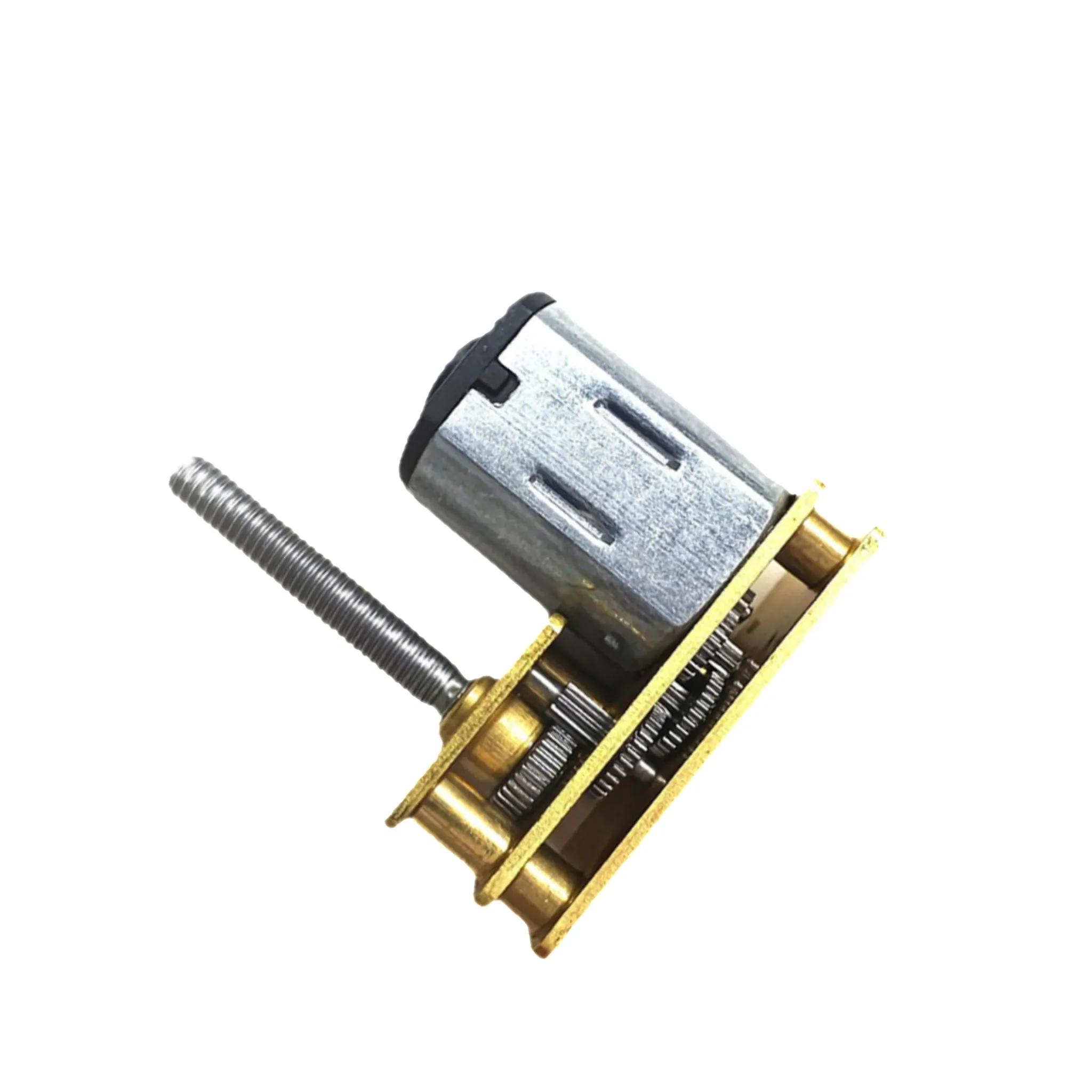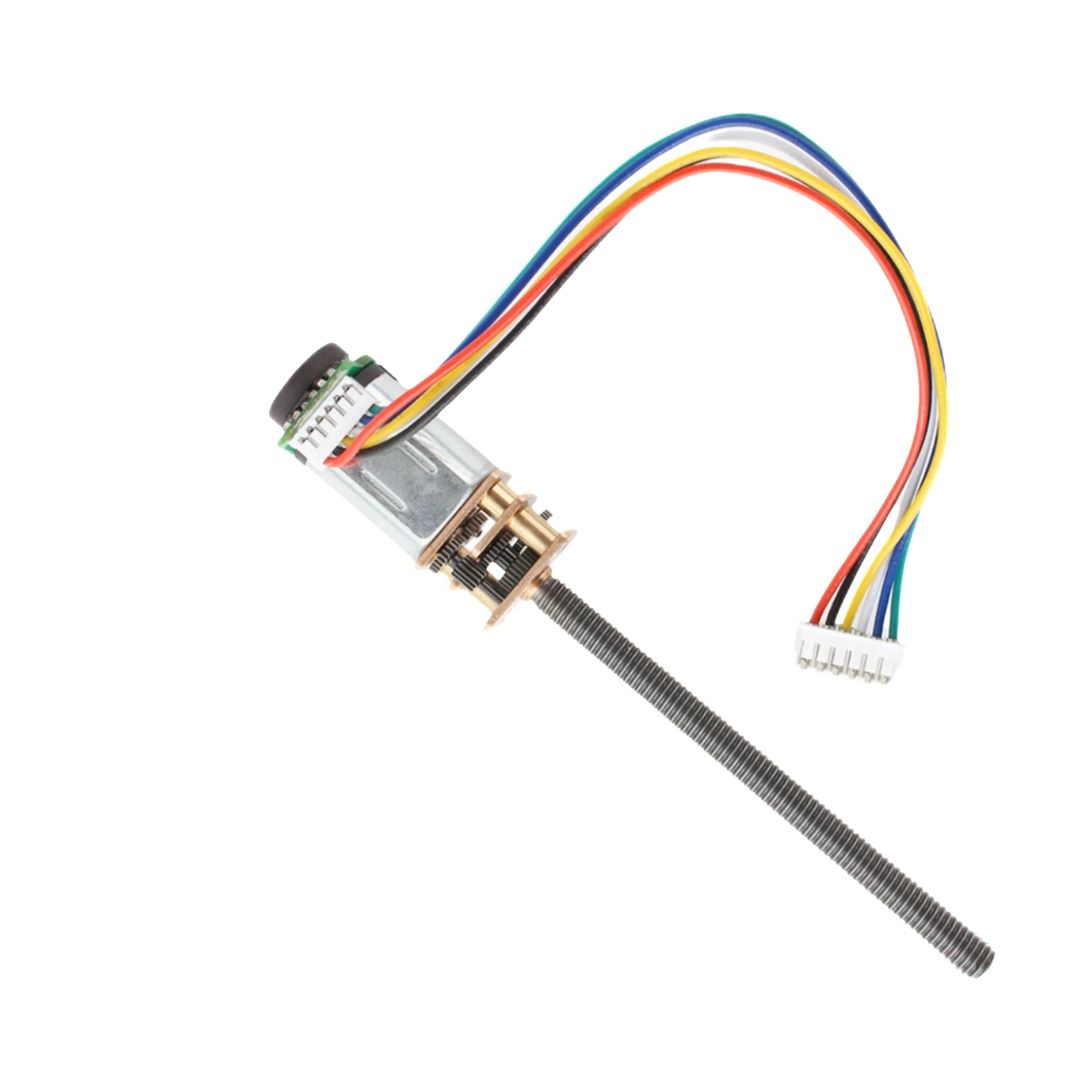
Welcome
Vibration Resonators portray a original procedure to locomotion, discerning themselves from established machineries through their basis on harmonics. The blueprint typically includes a foundation and a reciprocating core, meticulously crafted to maximize power at a particular natural frequency. Functions for these instruments are increasing, encompassing fields such as micro-fabrication, clinical apparatus, and smart automation where high resolution and immediate effect are mandatory. In addition, their reduced dimensions and low power consumption transform them into advantageous for traveling devices.
Small Form Factor Coreless Drives: Precision and Efficiency
Miniature coreless mechanical units offer a outstanding fusion of high potency and precise handling in one incredibly compact configuration. Compared to traditional standard DC units, coreless structures negate a large amount of all field impediment, leading in superior energy efficacy. This framework supports for notably diminished power utilization and improved drive power traits, making those motors advantageous for complex implements like intelligent engines, diagnostic machines, and small user tools.
- Improved Effectiveness
- Delicate Movement
- Reduced Design
Brushless DC Motor Benefits Compared to Brushed Motors
Determining a conventional DC machine and a electronic-commutation DC motor can feel complicated, but understanding the fundamental disparities will navigate you. Traditional units are more basic and frequently economical to purchase, offering a direct construction. However, they endure from abrasion on the conductive strips, which make necessary periodic upkeep and produce voltage spikes. Sensorless drives, on the other hand, avoid slip rings altogether, resulting in amplified potency, stretched working period, and reduced maintenance needs. They also operate more quietly. Consider the application; low-cost applications with moderate power needs might be fine with a brushed motor, while specialized systems calling for consistency and capability receive greatly from a digital DC unit.
- Brushed Units Strengths
- Diminished primary charge
- Easier construction
- Brushless Motor Benefits
- Higher potency
- Enhanced operating life
- Lowered servicing
- Quieter execution
Tiny Planetary Gear Units: Compact Power Sources
Tiny circular machines constitute a significant enhancement in transfer systems. These particular compressed modules deliver exceptional turning force within a surprisingly tiny space. These architecture utilizes spinning gear theories to achieve peak reduction levels and effectiveness, making them advantageous for situations ranging from mechatronics and diagnostic devices to fine tuning instrumentation and astronomical platforms.
Investigating LRA Devices for Ultimate Performance
To attain peak effectiveness from Linear Rotary Actuator (LRA) motors, a extensive familiarity of their exclusive innovation is vital. LRAs exemplify a innovative strategy utilizing linear travel to spawn rotary power. Key attributes cover the interplay between the magnetized forces and the material modules, which directly affect the pace and exactitude of the final revolution. Careful inspection of these principles is mandatory for productive operation and upkeep in various situations.
Coreless Gear Motor Advantages: Why Choose a Coreless Design?
Miniature mechanical drive engines offer key positives in comparison with established designs. In particular, the nonexistence of a iron center generates minimized stability, allowing for quicker speedup and enhanced placement. It attributes designate them as fitting for operations requiring precise management, like mechatronics and life science systems. Besides, unwound units commonly show enhanced service lives due to lowered warmth output.
Brushless DC Drive Selection: Important Factors
Electing an appropriate sensorless drive requires thorough assessment of a range of primary criteria. Primarily, recognize the system's necessary torque and revolution speed. Thereafter, judge an power source range and load current prerequisites. coreless gear motor Moreover, account for relevant active climate, including heat, air humidity, and expected oscillation.
- Size and gravity are regularly crucial impediments.
- Potency and energy draw are expected to be considered.
- Value - weighing up performance with cost boundaries is imperative.
Distinct Rise of Minuscule Revolving Gear Units in Automation
The mounting demand for reduced-size and correct motion in cutting-edge robotics is propelling the proliferation of micro planetary power train motors. These units offer a key advantage over traditional actuators in applications like biomedical robots, aerial vehicles, and compact electronics. Unlike simpler designs, their rotary gear arrangement allows for boosted torque density and minimized backlash, producing increased positioning exactness. Also, the small size of these drives is paramount for integration into space-sensitive robotic bases.
- Cut Dimensions
- Elevated Mechanical Energy Density
- Improved Correctness
Motor Type Comparison: LRA, Coreless, and Brushless DC
Evaluating deciding on a power source for a operation, learning the differences between distinct types is paramount. Permit us to rudimentarily compare three prevalent options: Linear Resonance, Coreless, and Brushless DC Units. LRA motors deliver linear displacement and are commonly applied in tasks where whirling shift isn't essential . Brushless coreless power units offer better turning force properties and decreased rotational sluggishness compared with classic brushed DC devices. In conclusion, Electronic commutated motors offer notable productivity, prolonged useful life, and low-noise process, although they generally require higher amount of refined direction devices.