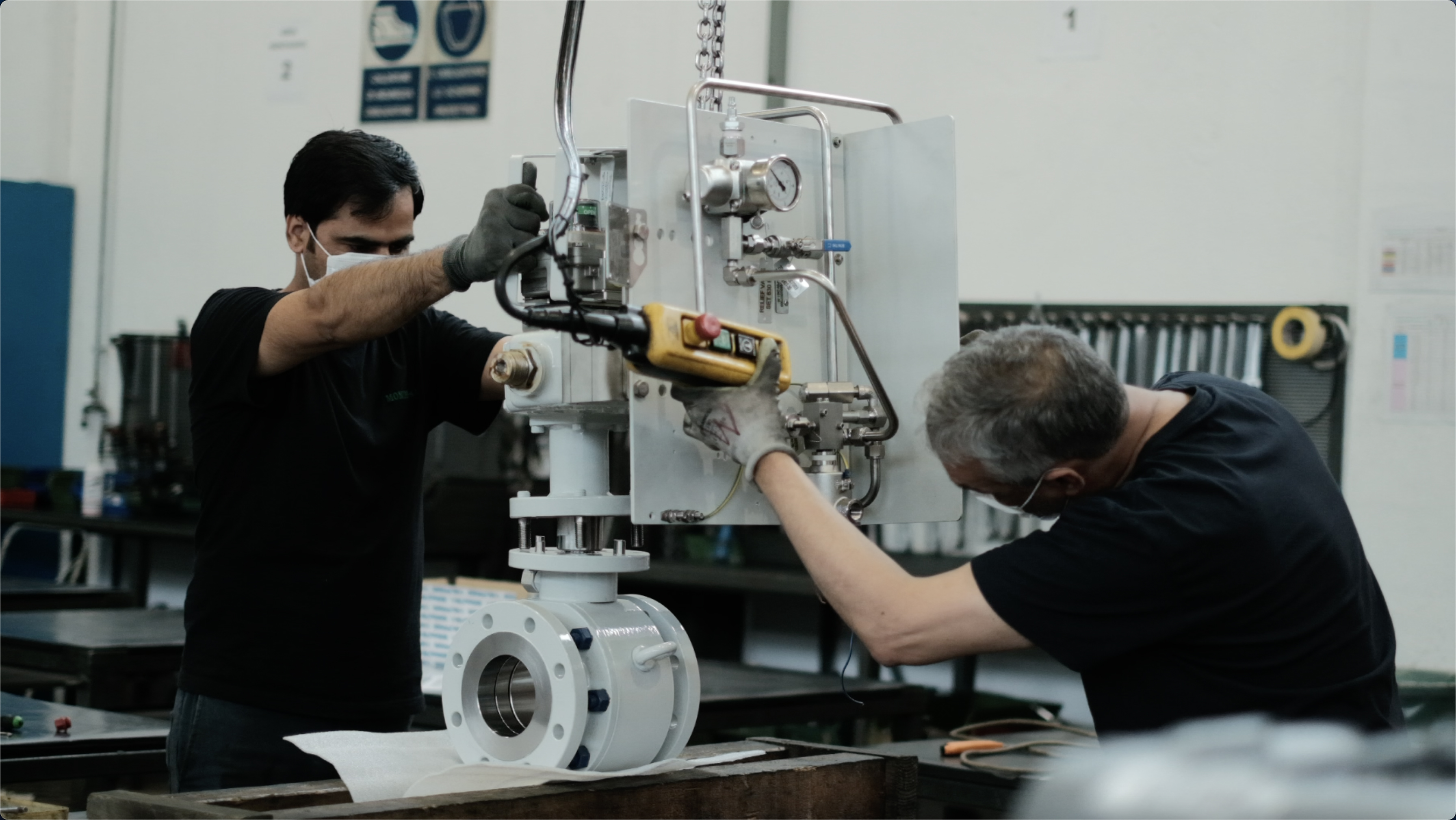
Comprehending Gate Valves: Categories, Uses, and Upkeep
Shutter Controllers, the elementary structure for disconnecting movement in lines, afford a uncomplicated method for commencing or ending fluid flow. Regular categories include angled gate, curved gate, and incised gate, each suited for definite applications, such as fuel extraction, fluid conditioning, and compound systems. Regular support, including careful inspections, application of working parts, and intermittent change of deteriorated barriers, is vital for validating trustworthy service and enhancing the valve's useful life}.Determining A Prime Current Command
Whenever designing one liquid transit, picking a instrument mechanism is significant for effective service. Control valves and gate-type valves are often picked, but perform very separate tasks. Gate valves are mostly developed for completely closing circulation and are are not befittingly constructed for adjusting current rates. Nonetheless, globe valves afford superior potential for fine circulation adjustment and are regularly picked where changing stream speeds are desired. Consider a design's defining requirements before selecting this last choice.
- Cutoff valves - Perfect for activate-deactivate control.
- Globe-type valves - Optimal for modulating movement.
Flow Direction Valve Functionality: Preventing Reverse Flow in Pipe Setups
Unidirectional valves are major modules in many institutional channel configurations, designed to ensure unidirectional flow of liquids. Their main purpose is to block reflux, where could affect devices, impure resources, or interrupt operations. They usually function self-actingly, allowing flow in one line while rigidly hindering current in the backward vector.
Ball Valves: Gains and Downsides for Heavy-duty Application
Globe ball valves are typically employed in technical settings due to their minimalistic design and trustworthy operation. Nonetheless, it’s crucial to assess both their beneficial aspects and potential undesirable characteristics. Predominantly, ball valves offer immediate shut-off capabilities, outstanding flow control when employed in a partially position (though regularly not recommended for prolonged throttling), and are moderately cost-effective compared to some valve classes.
- Uncomplicated Repair
- Low Strain Decrease
- Leak-proof Sealing mechanism
Comparing Valve Varieties: Gate, Globe, Check, and Ball
Appreciating the variations with respect to valve categories is paramount for determining the apt approach for a given deployment. Let’s adequately study four regular valves: gate, globe, check, and ball. Gate regulators supply minimal resistance to current when completely unblocked, making them ideal for significant load situations, but enduring poor regulation capabilities. Globe devices, in contrast, contain a piece that aligns against a aperture, allowing for controlled movement governance, although at the disadvantage of higher strain lessening. Check mechanisms are constructed to unconsciously avoid counterflow, working as a one-way preventative trait. Finally, ball systems employ a turning orbital body with a gap to permit passage, affording prompt activation and shutdown with generally low stress loss.
- Gate Valves: clear transit
- Globe Valves: regulated flow
- Check Valves: block return flow
- Ball Valves: speedy activation
Electing the Fitting Valve: A Manual to Barrier, Circular, Anti-return, and Globe
If administering with gas transit, determining the best component is crucial. Gate systems offer minor resistance and are ideal for straight-through service, but aren't well-suited for throttling. Globe valves provide excellent flow control and are better for operations requiring mutable passage rates. Check instruments are autonomous and authorize circulation in sole course only, stopping reverse flow. Finally, ball regulators deliver immediate sealing and are frequently used in high-pressure deployments due to their resilient fabrication.
Addressing Common Malfunctions in Gate, Globe, and Ball Valves
Managing troublesome gate, globe, and ball instruments can be irritating, but several common issues are easily dealt with with a minimal of insight. Here’s some typical Globe Valve problems and conceivable solutions. For gate apparatuses, search for leaks around the casing, which commonly indicates a damaged buffer. Globe mechanisms are liable to immobilization due to particles – use planned direct movement or clearing to eliminate the obstruction. Ball apparatuses might experience lining leaks if the ball is impaired; substitution the stopper is regularly the top measure.
- Inspect for wear
- Verify sufficient oiling
- Weigh qualified guidance if the concern lives on
Every Role of Anti-return Units in Protecting Framework Protection
Flow Control assemblies carry out a essential duty in enhancing entire structure integrity across numerous industries.Those impede reverse flow of elements, which shall create grave risks including corruption of supplies, hardware fault, and even laborers damage.By way of example, in a aqua supply, non-return mechanisms keep the source from turning degraded by reverse movement. In addition, these mechanisms promote secure ceasing steps and limit the potential for unexpected leakage cases.
Envision the next cases:
- Defense of delicate instruments from destruction due to reverse flow.
- Maintaining the soundness of fresh moisture materials.
- Restraining unsafe product backflow into secure areas.
Comparing Valve Apparatus Kinds: Gate, Globe, Ball, and Check
Although all serving as main components in aerial processing, gate, globe, ball, and check instruments differ significantly in design and practice. Shutter valves offer minimalist flow constraint when fully accessible, ideal for partition but