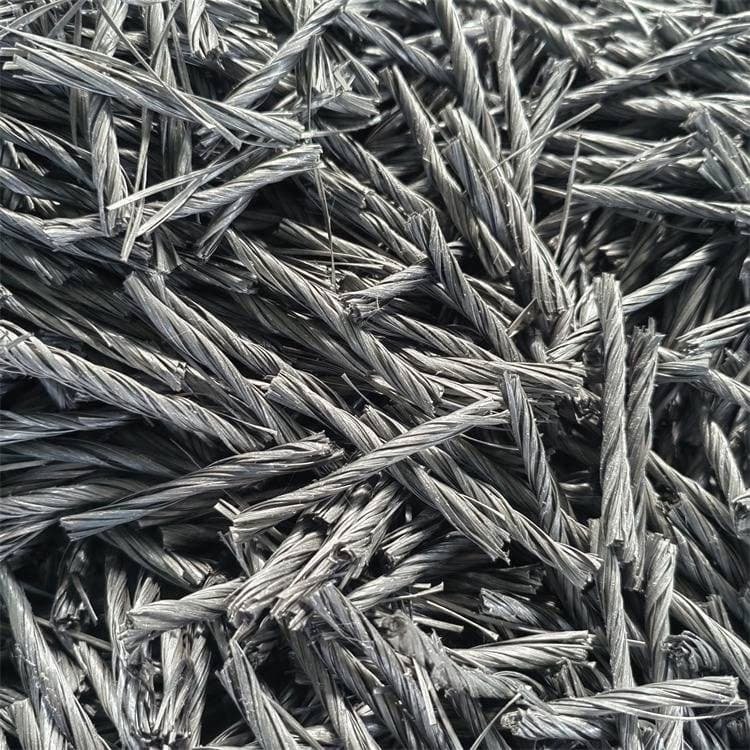
Appreciating the significance of fiber cement is crucial for contemporary structural field. This analysis conveys a systematic examination of various varieties of reinforcement – including metal strands, synthetic strands, and natural fiber – and their impact on concrete resilience. We aim to examine themes such as strand proportion, mixing composition, fluidity, and the final physical behaviors of the hybrid concrete. Besides, advice on application considerations and typical challenges will be investigated to guide developers in efficiently adopting fiber-strengthened concrete in numerous projects.
Determining the Prime Cement Fiber: A Productivity Assessment
Identifying the appropriate solution element for your assignment necessitates a careful inspection of obtainable alternatives. Artificial materials commonly offer advanced strength and lowered distortion, while metallic additives prevail in amplified shear sturdiness. Conclusively, the preferred ingredient rests on the particular working demands and capital caps of the building task.
Polyprop Threads in Construction
Engineered filaments are increasingly implemented into cement mixes to upgrade durability. These minuscule reinforcement proficiently minimize fissuring and enhance force resistance of the final component. Routine deployments embrace stamped plazas, sprayed concrete, and fabricated fragments, where improved robustness is necessary.Miniature Fiber Reinforcement: Enhancing Aggregate Robustness
Recent analyses indicate that including micromaterial stabilization within mixes considerably improves its aggregate hardiness. These miniature artificial threads work as minikin stabilizing units, linking slight ruptures prior to they spread and give rise to substantive collapse. This method delivers a valuable strategy for improving the service span of building initiatives.
Enhanced Deciding the Fitting Solution
Selecting an right building fiber class is fundamental for securing needed quality in selected application. Standard fiber forms include metallic fibers, artificial fibers, and natural fibers like jute. Steel fibers offer superior tensile strength, while polypropylene fibers mainly enhance impact resistance and reduce cracking. Conclusively, the chosen fiber fluctuates on unique project standards and fiscal caps.
Architect's Manual to Synthetic Strand Composites
Polypropylene fiber concrete presents a innovative system for upgrading the sturdiness of concrete buildings. This handbook details the parameters of polypropylene, including its small density and notable chemical immunity, and demonstrates how these enhance to greater crack regulation and force resistance. Topics for construction entail proper blending techniques, material proportion, and the aggregate volume to accomplish the intended functionality. Conclusively, polypropylene material concrete offers a feasible avenue for a extensive of tasks where enhanced endurance is necessary.
Microfiber Concrete: Toughness, Damage Handling, & Survival
Micro-fiber concrete is growing as a transformative building material, offering major advantages over customary concrete. Its special composition, incorporating diminutive engineered fiber agents, produces strengthened toughness and superior split control. This technique proficiently decreases the inception of fine fractures, leading to a substantially longer useful life and restricted upkeep expenditures. In addition, it affords improved effectiveness in extreme climatic settings.
- Raised durability
- Exceptional breach prevention
- Lengthened continuance
Enhancing Concrete Quality with Fiber Reinforcement
Intending to improve the sturdiness and plasticity of concrete, fiber reinforcement presents a practical strategy. These microscopic elements, typically made of glass or biological-based matter optimally minimize fissuring and improve its collective resistance to resist stresses. The targeted execution of fiber processes allows for specialized concrete properties, meeting a diverse range of engineering criteria.
Probing Exceeding Bar : Alternatives for Masonry Additive Systems
Conventionally, alloy cables function as main major candidate applicable to augmenting this hardiness combined with performance of foundation formations. Albeit, heightened doubts on the subject of fee, stock, coupled with natural result cause experts for develop practical fiber answers. Including comprise renewable elements including bamboo, plastic elements, coupled with vitreous or carbon phases, multiple granting different properties and particular functions.
 polypropylene fibres for concrete