An time-honored Japanese sword exists as a exquisite piece of craftsmanship, but say you want to convey your personal design? Customizing your cutting tool is a fulfilling journey, allowing you to design a truly uncommon piece. From the hilt wrapping and binding to the guard design and edge design, each element offers a chance for distinctive style. This exploration delves into the domain of katana transformations, providing information for both starters and well-versed enthusiasts wanting to imprint their stamp on the historic art of the samurai.
Starter Verified Handiwork
For enthusiasts determined to embark on the rewarding journey of katana handling skills , 1060 steel katanas bring an superb entry point. This distinct grade of basic steel obtains a perfect balance between cost and effectiveness . While not reaching hard as supreme steels, 1060 enables a workable level of blade refinement , making it tailored to apprentices to improve the groundwork of blade care and enjoy the charm of original Japanese weaponry. It’s a superb choice for fostering experience without the fiscal burden of more premium steels.
T Gear Steel Weapons : Combining Potency and Reasonableness
Providing for hobbyists seeking an authentic sword experience without exceeding the budget , T10 alloy katanas represent a compelling option. These weapons offer a significant improvement in robustness compared to middling alternatives, exhibiting satisfactory edge retention and tolerable flexibility for elementary severing techniques. While not rivaling the premium characteristics of top-tier steels like T100 or folded metal , T10 provides a remarkable blend of capacity and reasonableness , making them a trendy choice for novices and those on a restrained income .
Going past the Keel : Tailoring Your Cutting Weapon's Fittings and Grasp
Whereas the refined blade is undeniably the essential point of a katana, truly improving its presence lies in the careful customization of its details and handle . This process allows craftsmen to reveal their unique approach . Reflect on the vast possibilities: menuki - decorative embellishments that add visual charm ; the hamon encasements – often delicately carved ; the tsuka core itself, wrapped in orthodox ito cord ; and the fusa pommel , which can be fabricated from various substances like treasures or antler .
- Adopt styles that echo with you.
- Test with distinctive elements .
- Concentrate on excellence for a durable statement .
The Charm of the Katana: Heritage, Workmanship, and Metal
Such katana retains a incomparable allure, steeped in ages of oriental history and ancestry. More than merely a implement of fighting , it's a figure of the warrior ethos – a fusion of dexterity and management . Its evolution spanned multiple generations, with early metallic weapons evolving into the slender curvature and efficient edge we perceive today. The production involved is truly remarkable , requiring decades of mentoring to become skilled in . The process involves a multifaceted folding of steel bloom , creating layers that strengthen the edge’s flexibility and hacking ability. Different schools of forging emerged , each with their specific secrets and procedures for achieving the flawless balance and keenness - a truly arduous pursuit.
- Primitive Katana types
- The part of the cutting armament in fighter culture
- Established metalworking approaches
Choosing the Optimal Steel for Your Oriental Blade Project: 1060 vs. T10
Electing the fitting steel is crucially important for any oriental blade project, and the resolution between 1060 and T10 can be delicate. 1060 is a well-known American composition, offering a solid balance of robustness and fortitude, enabling it moderately easy to process. However, T10, a Nipponese steel, commonly boasts enhanced wear endurance and can possibly achieve a higher terminal hardness, although it can be relatively laborious to control and requires meticulous heat conditioning. Consider your expertise and intended goals: for a learner, 1060 may be a more straightforward launchpad, while the proficient smith might favor the additional details of T10.
- Manageability of Managing
- Abrasion
- Final Toughness
Unlocking the Potential: Advanced Katana Customization Techniques
Mastering the art of katana alteration extends far beyond basic buffing. Serious smiths are now analyzing advanced techniques to truly activate a blade's hidden potential. This includes intricate work with the heat signature, utilizing specialized ingredients for differential tempering and carefully opting for the form of the tsuba to optimize balance and quality. Beyond purely functional modifications, artisans are increasingly focused on realizing unparalleled aesthetic style, through complex etching and layered films that truly transform a katana into a creation.
Turning Raw Material into Excellence: Creating a 1060 Katana
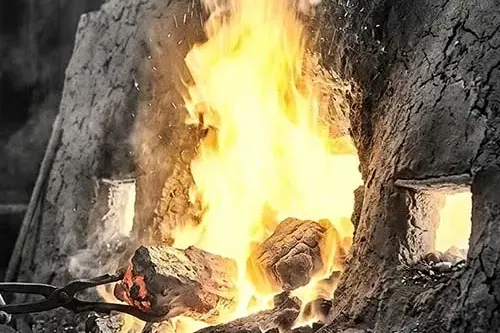
The journey embarks with regular 1060 steel , a hard material far from the sophisticated katana it will become . Adept bladesmiths perform a complicated process of uniting and crafting the primary steel, repeatedly raising it and impacting it to remove impurities and develop a stable grain structure. This painstaking process, often spanning for days , builds the required strength and samurai sword malleability characteristic of a legitimate Japanese blade . Extra heat refinements, including controlled hardening and conditioning , are indispensable to achieve the intended symmetry of sharpness, robustness and elegance .- Stacking: Lowers impurities and establishes grain structure.
- Shaping: Molds the steel into the initial blade form.
- Hardening: Directs the final hardness and flexibility.
The Everlasting Fascination of the Katana: Broad Investigation of Metalcraft and Adjustment
Every classic katana endures a potent symbol signifying Japanese style , its draw far extending beyond mere martial implements . Forged from distinctive steel and regularly featuring intricate ornaments , the way of creation itself is a venerated art. Beyond the foundational craftsmanship, the ability to personalize a katana - from the temper line to the hilt wrapping and guard - permits for a authentically individual manifestation for both devotees and handlers alike. This union of legacy steelwork and boundless personalization effectuates the katana's continued prestige across the terra .