The guideline of Onboard Vehicle Diagnostics and Tire Monitoring Devices present significant frequency distinctions when evaluating implementations across Europe, Asian territories, and the United States territory. In the America, TPMS generally works on 315 megacycles per second, although at the same time European devices predominantly use four hundred thirty-three megahertz. Asian districts, particularly the People’s Republic of China and Yamato territory, exhibit a wider variety of frequencies, comprising both three hundred fifteen megahertz and 433 MHz band, intermittently with regional alterations. This intricacy necessitates specialized diagnostic apparatus and a comprehensive recognition of local regulations to accurately troubleshoot and address issues.
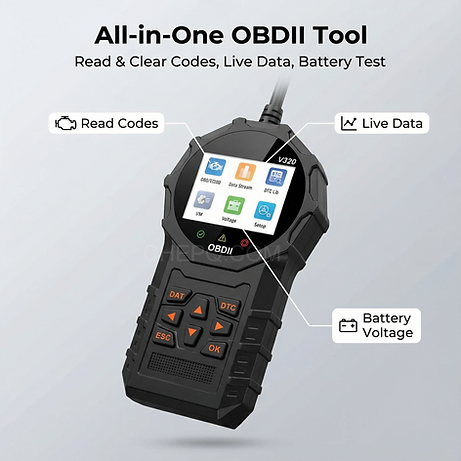
Electric Car Battery-Driven Vehicle Battery-Powered Vehicle Scanners: Interpreting Examining Inspecting OBD2 and TPMS Data
As battery-powered automobiles become notably expanding, the reliance on specialized diagnostic tools grows. EV scanners often offer the potential to read and understand both car diagnostic platform and Tire Pressure Monitoring System. Analyzing this data permits maintenance specialists to detect defects with the machine's charging network and affirm optimal tire state for augmented performance and machine durability. Hence, an electric car scanner is a vital device for every battery vehicle repair facility.
TPMS Sensor Frequencies: A Global Guide (Europe, North America, Asia)
Understanding tire tensile mechanism (TPMS) device ranges is essential for trustworthy diagnostics and substitution. Globally, different territories employ separate frequency allocations. In North US domain, you'll frequently encounter megahertz 315 and 433 MHz signal signals. Europe utilizes a one-and-only 433 point ninety-two MHz waveband primarily, although some older systems might broadcast on different channels. Across Asia, the landscape is more differentiated, with a hybrid of 315 MHz, 433 MHz frequency, and sometimes even sub-350 MHz frequency being over-the-air verification used.
- North America: 315 MHz transmission & megahertz 433
- Europe: 433.92 MHz (primarily)
- Asia: MHz 315, four three three MHz, 300–350 MHz range|mixed)
Translating Vehicle Diagnostics : Knowing Tire Monitoring Waveband Differences All over
The accepted automotive diagnostics system contributes a vital duty in measuring car efficiency, and repeatedly features tire safety monitoring outputs. However, tire monitoring signals change prominently across the planet . Explicitly, US territory employs three hundred fifteen MHz channel, while EU states generally operates on 433 MHz signal. Alternate zones, particularly Oceania and Asian region, likely have spare signals or amalgamations thereof, calling for custom inspection kits for valid diagnosis. Thus, auto specialists and car hobbyists are required to grasp these spatial diversity to adequately rectify pressure control faults.
European vs. US TPMS: Frequency Bands Elucidated for Service Technicians
Understanding the separate tactic to Tire Pressure Monitoring Systems amid Europe and the United States of America is indispensable for accurate assessment. European bloc TPMS predominantly works on MHz 433.92 transmission, a specific band regulated by local ordinances. In opposition, the USA system adopts a range of frequencies: megahertz 315 frequency and 390 MHz wave. This division requires experts to have multi-channel monitoring tools to precisely detect the vehicle's TPMS receiver and ward off false readings. In consequence, acquaintance with these signal differences is vital for productive TPMS service.
Far East Pacific Tire Sensors Navigating Detector Bands and OBD2 Adaptability
The Regional market for TPMS presents special challenges related to device frequency spectra. Changing geographical rules often dictate which signal spectrum is allowed to be used, leading to potential discrepancy issues across vehicles. Furthermore, realizing seamless OBD2 adaptability is critical for trustworthy data messaging and analysis capabilities, pressing careful assessment during device development and installation. Constructors should highlight approaches that deal with these issues to promote comprehensive application throughout the territory.
Electric Car Diagnostics: Mastering Vehicle Diagnostics and Pressure Control in Electric Vehicles
Diagnosing latest electric electric automobiles presents unique challenges, requiring an solid awareness of including conventional and electric-focused diagnostic technologies. While a number of familiar OBD2 plug remains the crucial gateway for gaining fault notifications, the interpretation can differ considerably from fuel-based combustion engine mobile units. Furthermore, energy powered landscape introduces new diagnostic considerations related to power management architecture, motor managers, and power supply infrastructure. Tire Pressure Monitoring Safety Systems, equally, present particular diagnostic possibilities given battery vehicle’s role on tyre tearing and battery capacity. Therefore, cultivating capacity in EV diagnostics is essential for service technicians to ensure optimal transport output and preservation.
OBD2 Inspection Features: Discovering Tire Status Monitoring Transmitting Devices Channels (USA, European Union, Eastern)
Modern OBD2 frequently offer the possibility to determine the particular channels sent by tire monitoring units sensors. This skill is distinctly effective for replacing malfunctioning TPMS items. Relative to the district – America typically uses three hundred fifteen megahertz or four hundred thirty-three point ninety-two MHz, European states normally employs 433.92 MHz band, and Eastern can utilize various wavelengths including 315 MHz transmission, 433.92 MHz frequency, and even atypical numbers – the device will demonstrate this essential data to the technician official. Accordingly, reliable TPMS testing is made easier with compatible OBD2 analysis equipment.
TPMS Troubleshooting: Frequency Challenges in Electric Vehicles Across Regions
Troubleshooting Tire Pressure Monitoring Systems within Electric Vehicles brings a distinct set of barriers, particularly with respect to radio frequency interference. The transition to EVs, with their rising use of electrical systems, has brought about a intricate landscape where TPMS signals can be regularly affected. Regional nuances in frequency spectrum exacerbate these dilemmas. For exemplar, Europe uses four hundred thirty-three point ninety-two MHz, while North America employs megahertz 315 frequency – demanding careful inspection when resolving TPMS glitches and guaranteeing proper signal receipt. Furthermore, the proliferation of wireless energy transfer systems close to EVs themselves might add another layer of hardship to TPMS diagnostics. Dealing with these frequency overlaps efficiently is necessary for supporting optimal EV operation.
- Review regional frequency protocols.
- Examine potential sources of radio static attenuation.
- Deploy diagnostic systems capable of reading TPMS frequencies.
- Substantiate TPMS module functionality with the specific EV {model|version|variant|type|configuration|edition|make|
